


Around

Piazza di Spagna
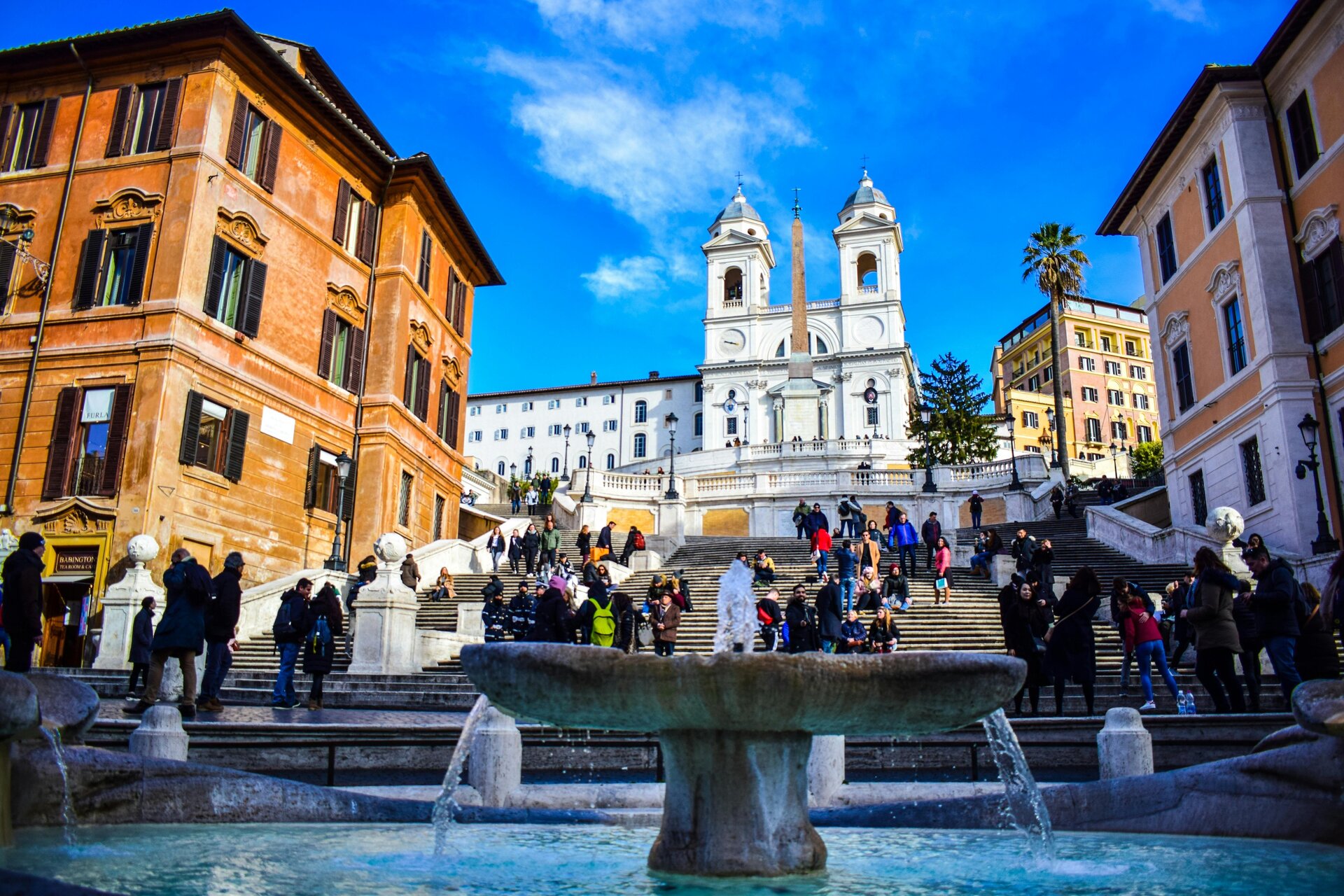
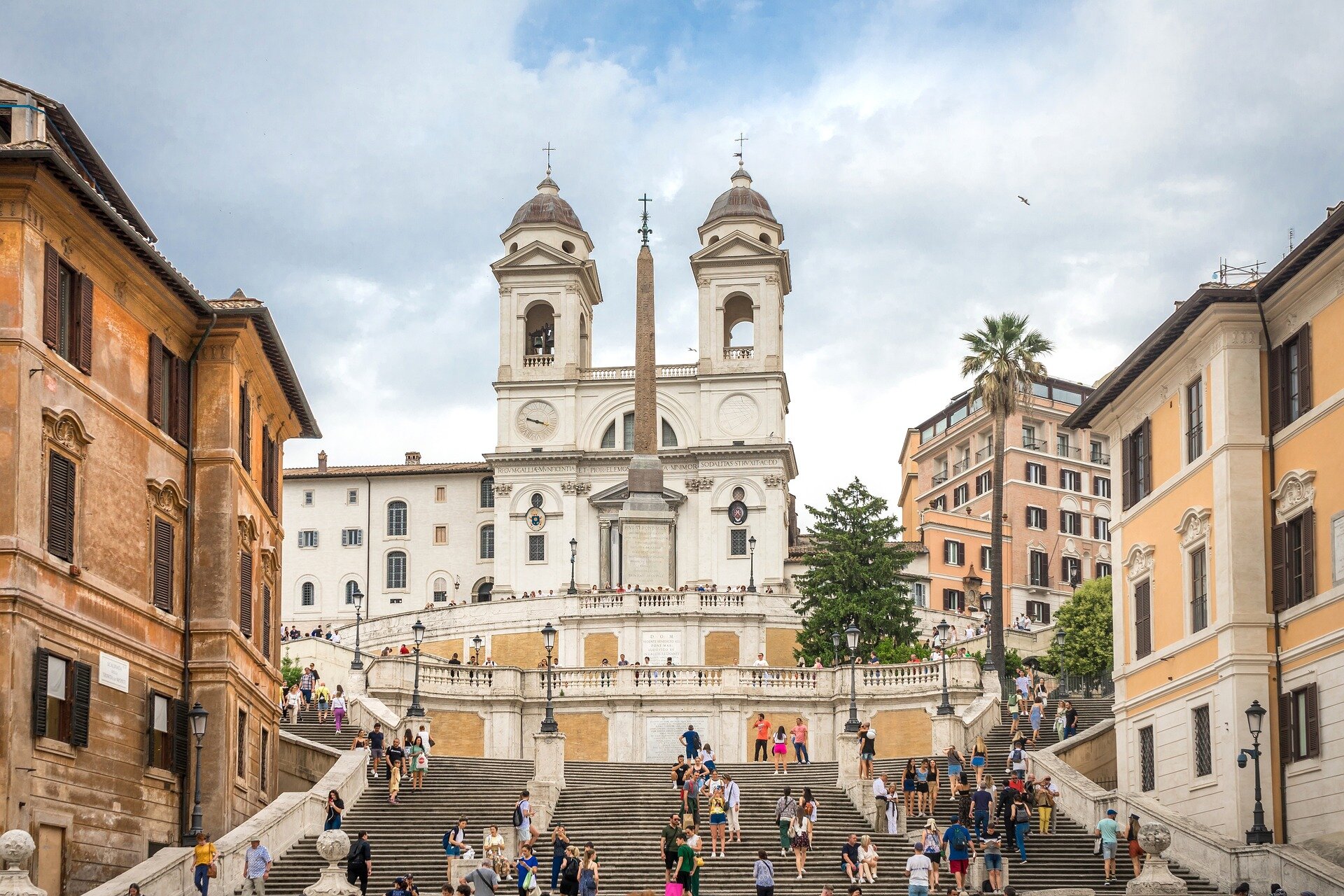
Piazza di Spagna is a vibrant and iconic area in the heart of Rome, renowned for its stunning Spanish Steps that connect the square to the Trinità dei Monti church above. This lively piazza serves as a popular meeting spot for both locals and tourists, surrounded by elegant boutiques, charming cafes, and historic architecture. The area offers a perfect blend of cultural heritage and modern urban life, making it an essential destination for anyone exploring the city.
8-minutes walk

Trinità dei Monti and Spanish Steps
A 300 meters away from our 4-star Hotel you can find the ‘Spanish steps’ in Rome, built in Rococo style between 1723 and 1726, are the steps that lead from the Piazza di Spagna square to the French monastery church Trinita dei Monti. The staircase is quite large and is almost always crowded with both tourists and Romans. During spring is often decorated with flowers . The Spanish embassy was located on the square – ‘Piazza di Spagna’ – at the base of the stairs, hence the name ‘Spanish Steps’. The official name is therefore not Spanish steps, but Scalinata della Trinità dei Monti.
The area surrounding Piazza di Spagna is a luxurious shopping area, with the street Via Condotti being the highlight, here you can find all the most popular Brands and Maisons, while absorbed in the wonderful Italian Art.
8-minute walk

Fontana di Trevi
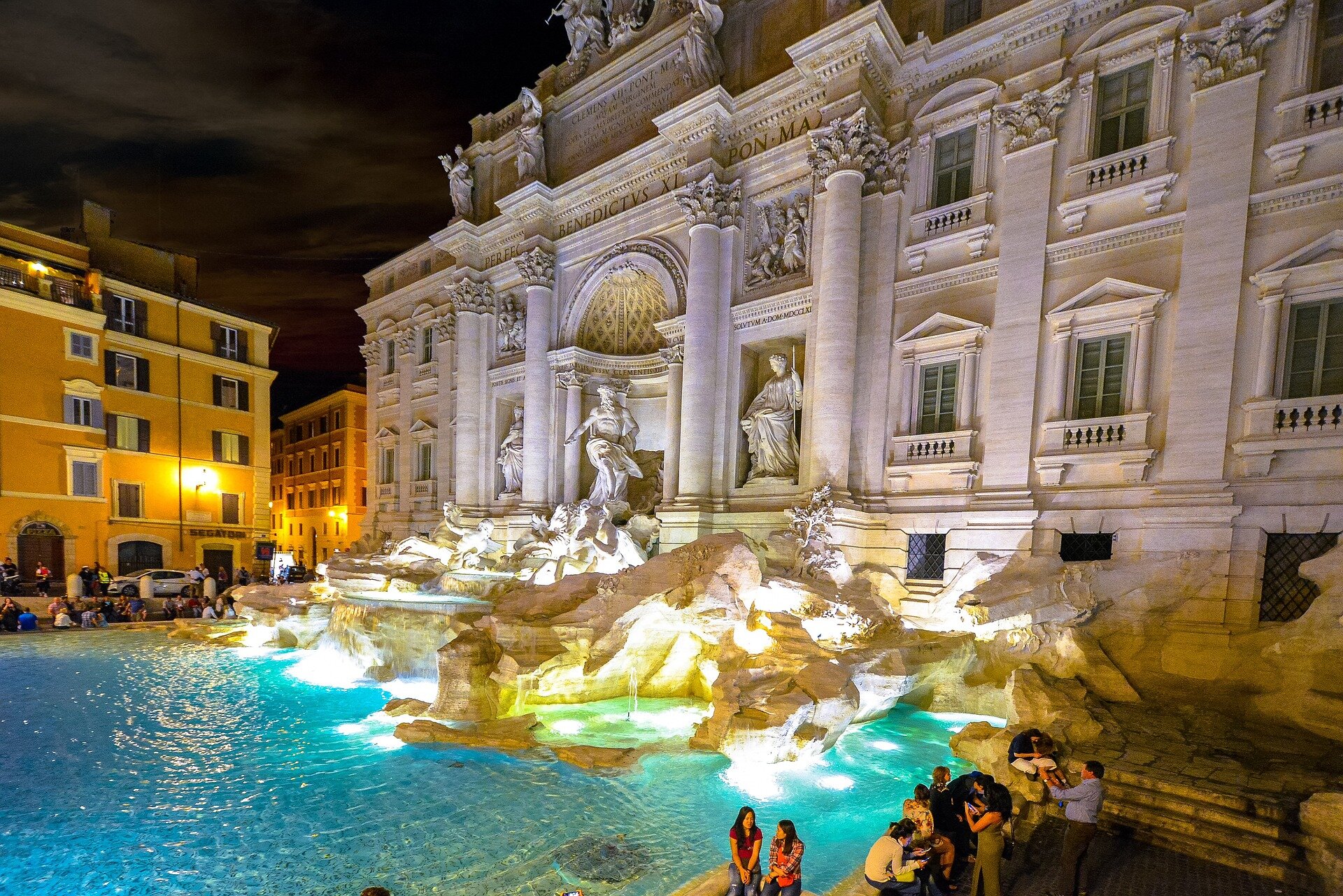
The largest Baroque fountain in the city and the most beautiful in the world is just 5 minutes walking distance from Hotel Degli Artisti . The Trevi fountain was built in the 18th century and displays the god of the sea, Neptune on his chariot. The fountain's fame is in part the result of the many films that featured the Trevi Fountain, including La Dolce Vita, Angels and Demons, Roman Holiday and many others.
It is a gathering place for romantics couples in the evening when the lightning of the fountain makes it even more fantastic than in daylight. Do not miss the chance to throw a coin into the Fountain to ensure to return to Rome.
9-minute walk

Villa Borghese and Galleria Borghese
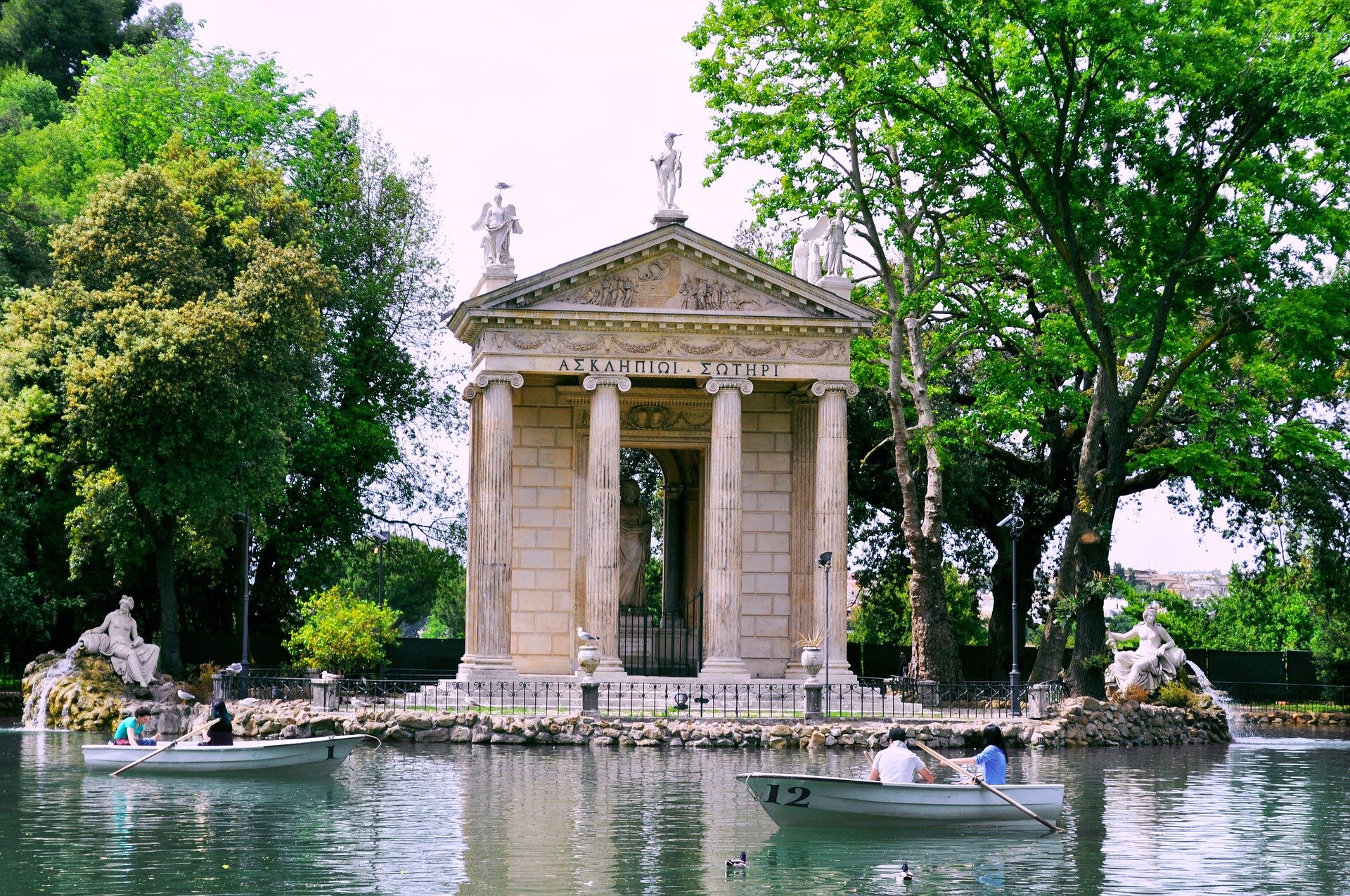
A few steps from the hotel is situated the enchanting Villa Borghese, one of the largest parks in Rome. Built on the wishes of Cardinal Scipione Borghese, it houses prestigious neoclassical and nineteenth-century buildings. The beauty of the picturesque gardens, wonderful fountains and park attractions make it one of the most attractive green spaces in Europe.
Villa Borghese is a fusion of attractions with museums, sculptures, monuments, fountains, gardens, sports facilities, cinemas, and a small artificial lake. The immense city park is an open-air museum where you can experience and admire the best of Italian art and culture.
Borghese Gallery
The park houses the famous Galleria Borghese with its numerous masterpieces of Italian art. Galleria Borghese is a popular attraction among art lovers as it contains a huge collection of art and many of the paintings and sculptures are made by great and famous artists from Gian Lorenzo Bernini, Raphael, Caravaggio, Titian, Rubens and many others.
The Pincio
The park of Villa Borghese extends over one of the most famous hills of Rome inside the Aurelian walls: the Pincio. The Pincio terrace, which overlooks Piazza del Popolo, offers a spectacular view of Rome, which extends from Piazza del Popolo to the dome of St. Peter's Basilica, a panorama unique in the world.
18-minutes walk

Pantheon
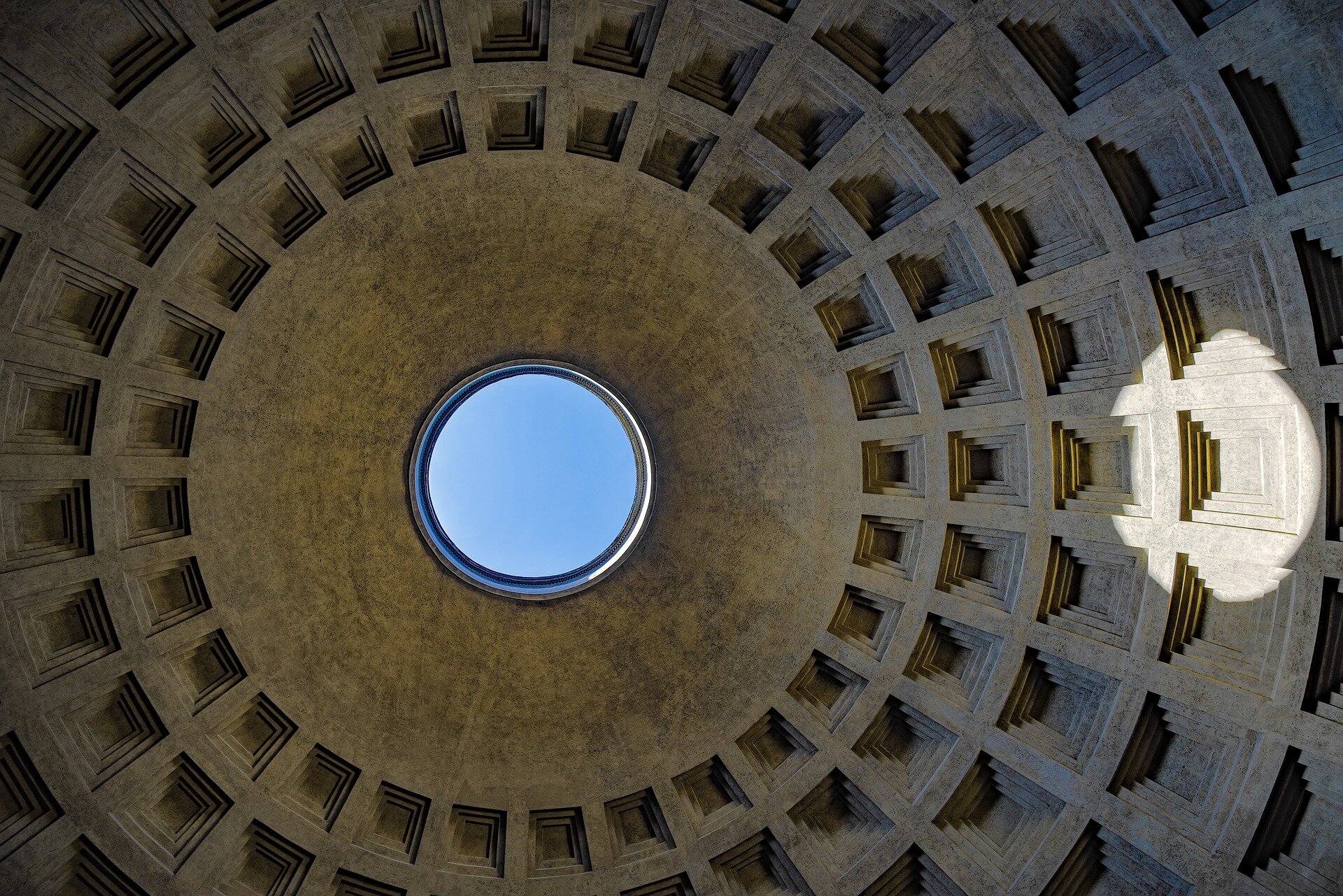
Is an impressive building and was built by Agrippa between 27-25 BC and at that time it was a pagan temple for praying to all the gods that the roman people worshiped at that time. The temple was destroyed but was rebuilt again between 120-125 AD by Caesar Harianus. The new temple is believed to be a good replica of the original. In the 600s AD Pantheon was sacred to Saint Maria and the martyrs and since then it has been used as a catholic church.
18-minutes walk

Piazza Navona
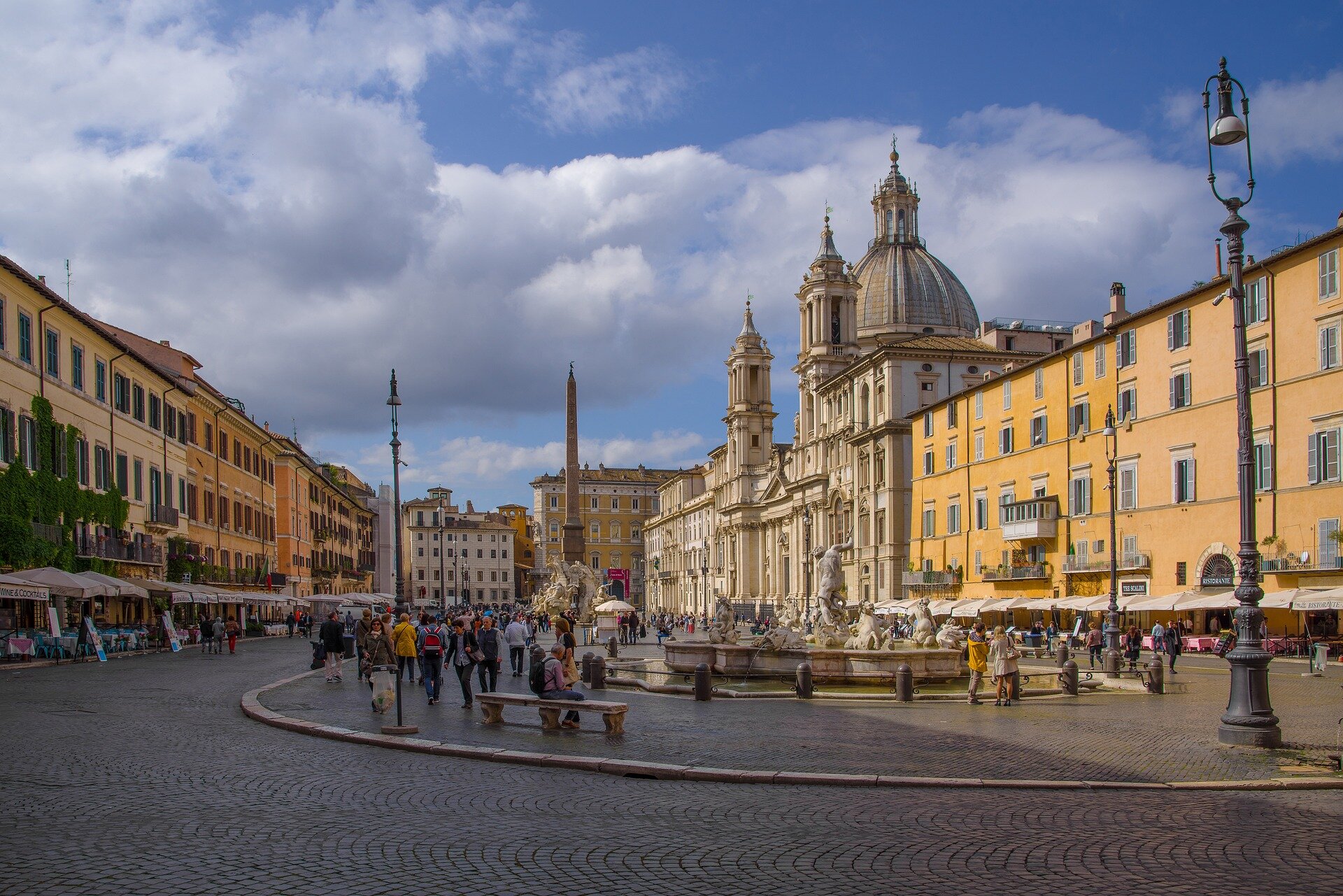
One of the most remarkable squares in Rome is Piazza Navona. The square therefore owes its elongated shape to its original purpose as a Roman athletics stadium, Stadium of Domitian. It features important sculptural creations: in the centre stands the famous Fontana dei Quattro Fiumi or Fountain of the Four Rivers (1651) by Gian Lorenzo Bernini, topped by the Obelisk of Domitian, brought in pieces from the Circus of Maxentio.
At the southern end is the Fontana del Moro with a basin and four Tritons sculpted by Giacomo della Porta (1575) to which, in 1673, Bernini added a statue of a Moor, wrestling with a dolphin. At the northern end is the Fountain of Neptune (1574) also created by Giacomo della Porta; the statue of Neptune, by Antonio Della Bitta, was added in 1878 to create a balance with La Fontana del Moro. You can also visit the excavations of the old stadium of Domitianus.
Piazza Navona is a liveky square fulls of cafès, restaurants and many street performers.
20-minutes walk

Monument of Victor Emanuel II /Monument of the Fatherland or Piazza Venezia
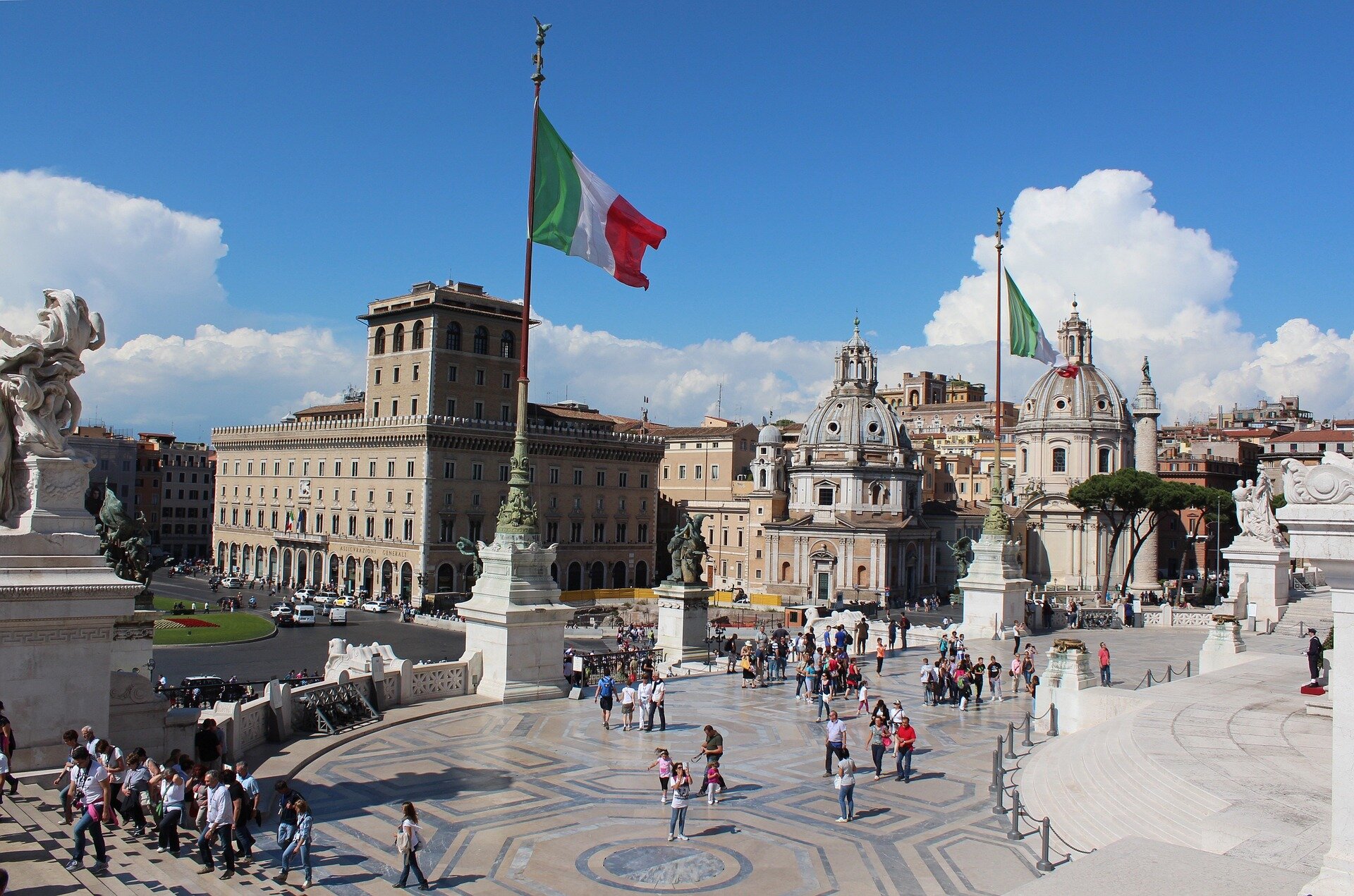
Vittorio Emanuele II was the king of Sardinia from 1849 to 1861 when he become the King of Italy during Italy unification. Victor Emanuel played i minor role in the success of the unification but since he was the first king he got very popular among the people and it was decided to honors him with a monument. In 1885 the building project started and it finally was finished 1911 (the same year as the 50-year celebration of the unity). Guiseppe Sacconi was the architect of the magnificent monument. Not everyone likes the monument, many find it exaggerated. Typewriter and wedding cake is two nicknames for it and usually called Piazza Venezia.

Colosseum and the Roman Forum
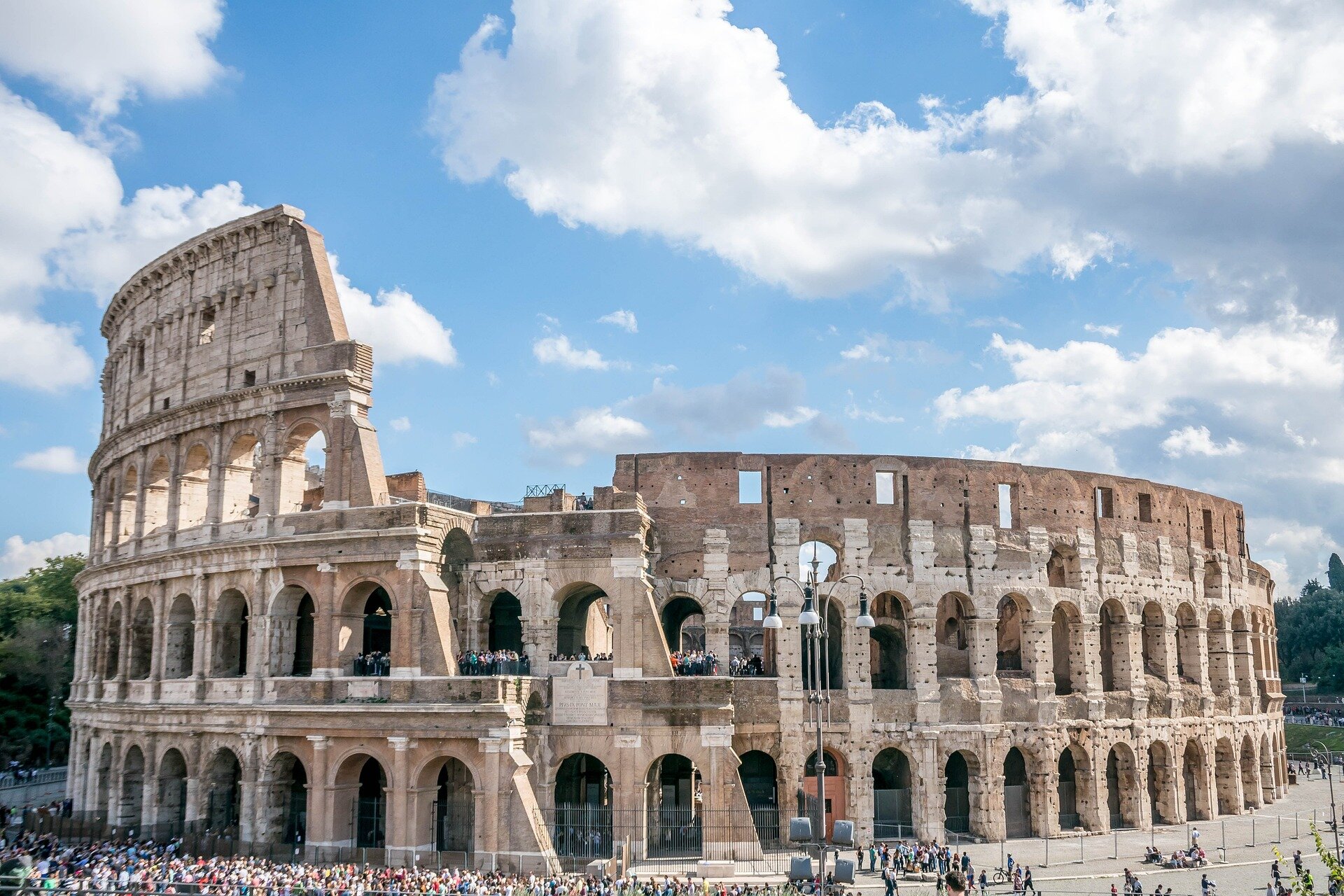
The Grand opening of the arena took place at 80 AD by Caesar Titus.
The name came from the giant (colossal) statue of Nero that stood beside the place of the arena (the statue is no longer there). At the Colosseum thousands of gladiators and animal was killed during the years it was used. Only at the opening ceremony that took a year, it is believed that 2000 gladiators and 9000 animals was “slaughtered”. The perimeter of the Colosseum is about 524 meters and it is 48-meter-high and could take 55000 spectators. Colosseum is one of the places you must visit when you are in Rome.
Roman Forum
The Latin name is Forum Romanum and in the ancient Rome it was the center for trade, politics and religion. Here the senate met to discuss and to decide about important matters that affected the life of all Romans but in the Roman forum you also got markets where you could by everything from locally produced wine, corn and grains to more exotic, imported things. In the area you find many temples where you could worship the different gods. The Roman forum was also a place to meet and gossip to hear the latest news.
Today you can see the ruins of many of the buildings that once stood here. Some of them is better preserved, some have been restored and some of the is almost completely gone.
27-minutes walk

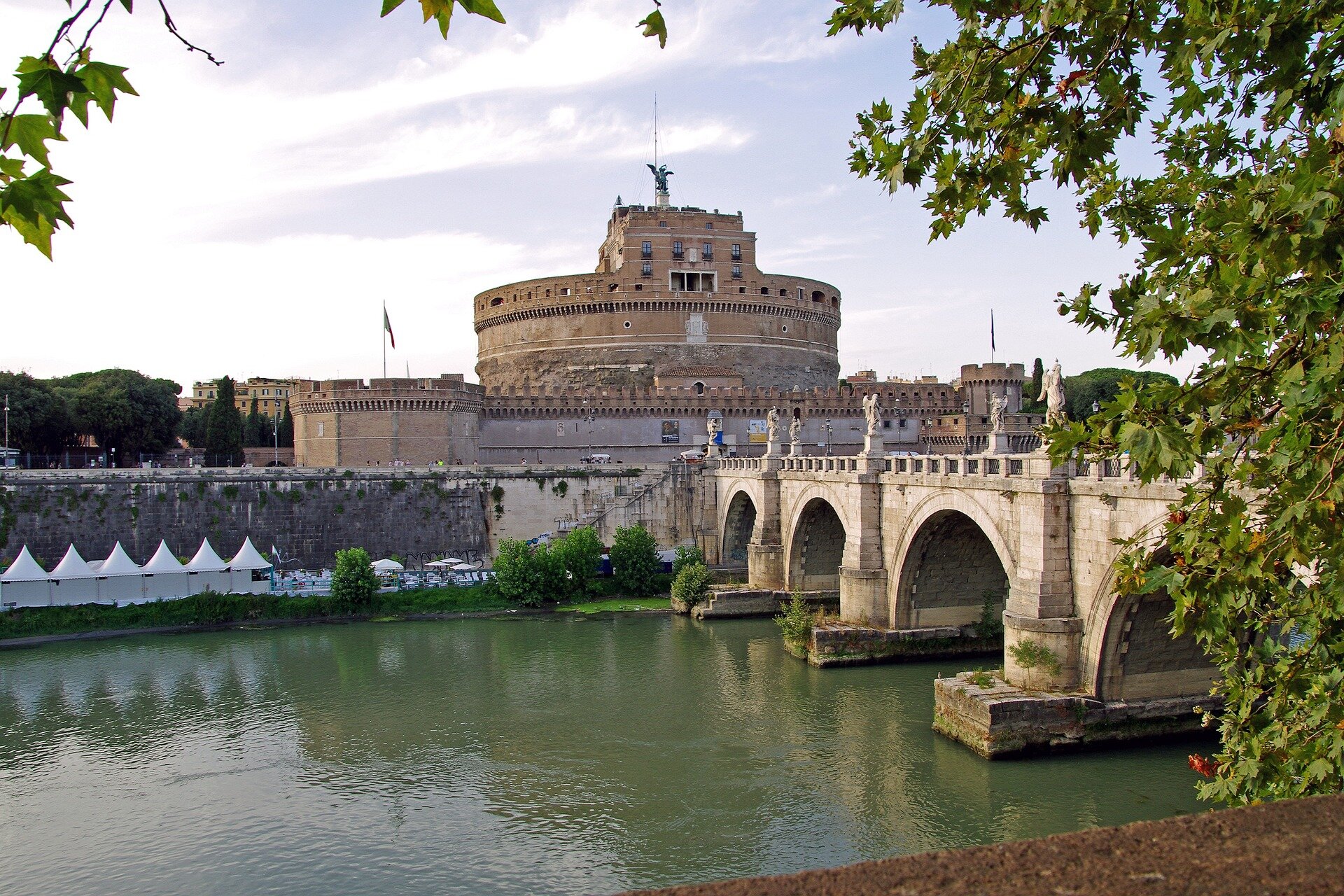
Castle of the Holy Angel
It’s called Castello St. Angelo but from the beginning it wasn’t a castle. It was a tomb, the mausoleum of the emperor Hadrian. It was built between 130 – 139 AD. After him more emperors was buried here, the last one was Caracalla 217. After archangel Michael appeared here in 590 and ended a plague, pope Pius II had a large bronze statue of the angels placed on top of teh castle. The Castle of the Holy Angel was part of Rome's defences and offered a place where popes could shelter, as the Vatican was connected to it by a tunnel.
28-minutes walk